
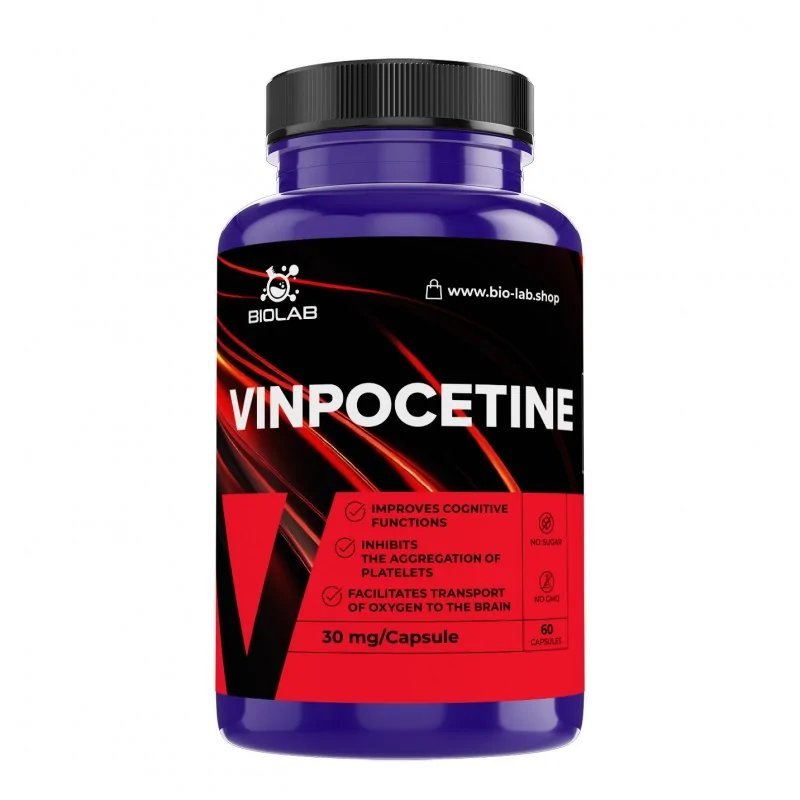

Vinpocetine – Support for Brain Function and Circulation
Vinpocetine is a substance that is often used for chronic cerebral circulatory disorders, including post-ischaemic stroke conditions and dementia. It dilates the blood vessels in the brain without affecting the peripheral circulation. Thus, a better blood supply to the brain is achieved, promoting an improvement in brain processes. In the brain, vinpocetine improves blood flow by acting as a cerebral vasodilator, it also improves brain metabolism by increasing oxygen and glucose uptake and stimulating neuronal ATP production. 
FEATURES:
– increases cerebral oxygenation
– promotes normal neurotransmitter metabolism
– increases glucose uptake
– stimulates neuronal ATP production
– has an anticoagulant effect
– potentially supports the prevention of atherosclerosis
– reduces tinnitus
Human studies suggest that vinpocetine improves short-term memory, cognitive performance and improves chronic brain dysfunction in elderly patients. It has also been studied for the potential treatment of Alzheimer’s disease.
In addition, vinpocetine’s ability to inhibit the reuptake of norepinephrine and dopamine enhances its cognitive-enhancing properties, ensuring that these neurotransmitters remain available in the synaptic gap for longer periods of time.With increased levels of motivation and energy. Another notable mechanism of action of vinpocetine is its anti-inflammatory effects.
Vinpocetine has a blood-thinning effect, suggesting that people with blood clotting disorders or taking anticoagulants or other blood-thinning drugs should consult a doctor before taking vinpocetine. Vinpocetine inhibited the rise in blood pressure, which is consistent with the vasodilator effect of vinpocetine. However, it is not just blood pressure that is not responsible for the development of atherosclerosis – vinpocetine’s anti-atherosclerotic effect is probably mediated by its action on the vessel walls.
Vinpocetine has also been used to treat various forms of hearing disorders (e.g. tinnitus and Meniere’s disease) and eye diseases (e.g. macular degeneration, glaucoma and vision loss secondary to atherosclerosis). The majority of clinical trials used between 5 and 30 mg of vinpocetine administered up to three times – an average total of approximately 0.5 – 1 mg per kg bw.
Additional Information
Capsule count: 60 capsules
Composition: Vinpocetine 30 mg
Dosage: 1 capsule in the morning with a meal