INFORMATION:
- The product (substance) is not a food or dietary supplement, and is not suitable for human consumption.
- Keep out of the reach of children.
- Keep the container tightly closed.
- Store in a dry, cool, shaded place; protect from moisture.
- Store only in the original container.
- Avoid contact during pregnancy and lactation.
- Consult a physician if you feel unwell or have adverse reactions related to contact with the substance.
Thymosin beta 4 is a natural human protein. It consists of 43 amino acids and has a molecular weight of 4291 g/mol. It is capable of binding to actin proteins and is considered an actin-sequestering protein in many cells. Therefore, it plays an important role in the polymerisation of actin filaments, which are relevant to cell structure, cell mobility and extracellular matrix function. There is speculation, and ongoing research, suggesting that Thymosin beta 4 may also interact with extracellular targets, however these mechanisms remain under investigation.
Due to the research-only status of this product, no administration routes, dosing or human-use directions are provided. The information below describes biochemical context and selected research directions only.
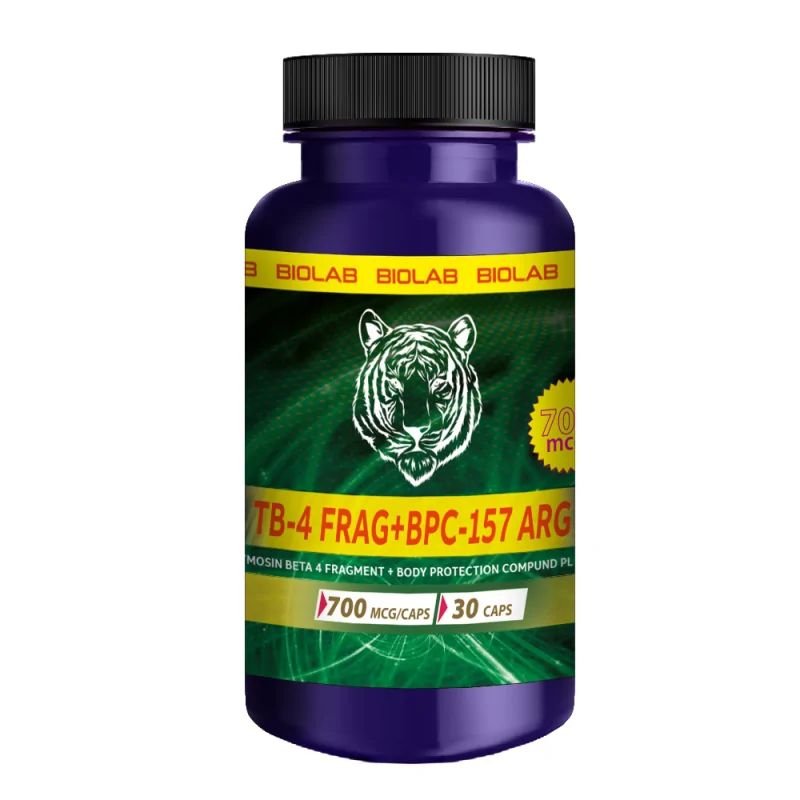
The researchers identified that a short region of thymosin beta proteins (e.g., LKKTETQ) has been used in experimental settings as a smaller fragment model (often referred to as TB-500 fragment) for studying processes such as cell migration and actin dynamics in laboratory systems. Because shorter fragments can differ in stability and transport properties, they are sometimes discussed in the context of experimental bioavailability and model design, without implying suitability for human use.
The TB-500 fragment can be further reduced to produce a peptide commonly referenced as Ac-SDKP (Ac-Ser-Asp-Lys-Pro). Ac-SDKP is described in the literature as an endogenously occurring peptide and has been investigated in research settings in relation to fibrosis-related pathways, inflammatory signalling, and angiogenesis-related processes.
Molecular formula: C20H33N5O9
Molecular weight: 487.5 g/mol
PubChem identification number: 65938
Selected research notes:
-
Ac-SDKP has been investigated for immunomodulatory and angiogenesis-related properties in laboratory literature; the scope of evidence is evolving and primarily preclinical. No clinical conclusions are implied here. source
-
Thymosin beta 4 has been studied in laboratory models exploring autophagy-related signalling and cholinergic pathways. source
-
Thymosin beta 4 has been investigated in preclinical models of neurological injury to evaluate tissue remodelling mechanisms and vascular/neuronal support pathways. source
-
Thymosin beta 4 has been explored as a component of biomaterial systems (e.g., hydrogels) in experimental cardiac repair research, with emphasis on cell migration and angiogenesis-related endpoints. source
-
Thymosin beta 4 has been investigated in combination approaches with antibiotics in laboratory infection models (e.g., ocular infection/keratitis models) to evaluate adjunctive effects in controlled settings. source
TB-500 and Thymosin beta-4 are sometimes discussed together because TB-500 is described as a synthetic derivative/fragment concept linked to thymosin beta-4 research. They are not identical molecules. For experimental work, verification of the amino acid sequence and specifications is essential; thymosin beta-4 is 43 amino acids long.