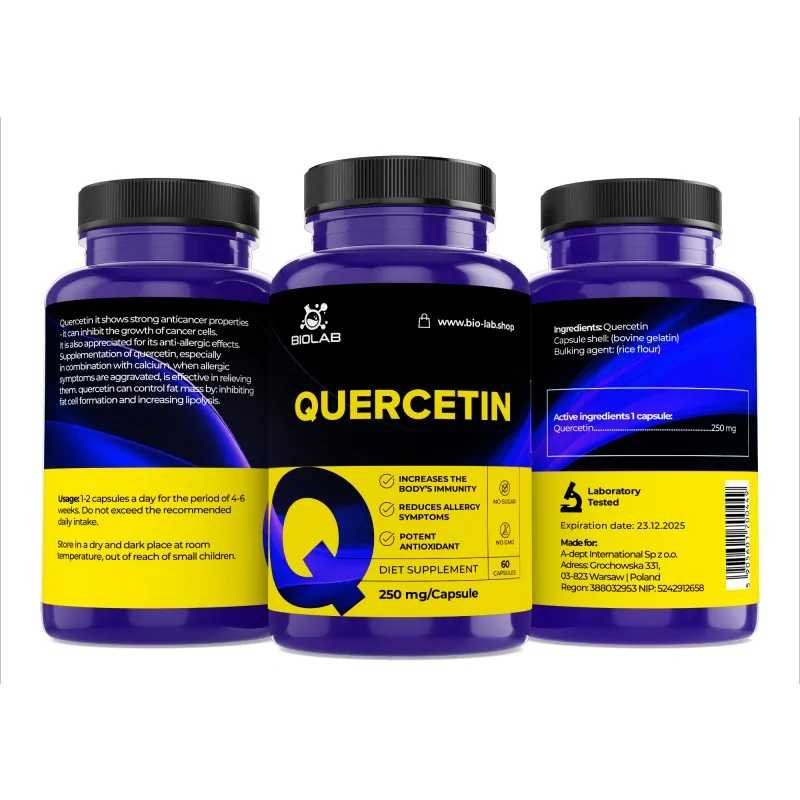
Quercetin 250 mg – Everyday Immune Support
Quercetin, a flavonoid found in fruits and vegetables, has been part of the human diet for centuries. Its numerous health benefits, including antioxidant, antimicrobial, anti-inflammatory, antiviral and anticancer properties, have been widely studied. Its powerful antioxidant properties allow it to scavenge free radicals, reduce oxidative stress and protect against cell damage. 
Benefits
- Antioxidant, anti-inflammatory;
- maintaining lower blood pressure;
- improves immunity; combats allergies;
- improving performance during exercise;
- reducing inflammation in the body, which improves function for people with rheumatic pains and arthritis;
- preventing cardiovascular problems;
- controlling blood sugar levels;
- maintaining the proper functioning of the cardiovascular system;
- combating free radicals, which are often associated with the onset of chronic diseases;
Worth combining with other products from our range:
1) Strong antioxidant and anti-aging effects: resverateol, Coenzyme Q10 or Curcumin + Piperine.
2) For better immunity and during times of increased allergy symptoms: Zinc and Vitamin D. (research)
So far, quercetin’s antioxidant profile is its most well-known feature. It protects our body from free radicals and is the most potent natural flavonoid antioxidant. Quercetin has shown strong bacteriostatic activity against various bacterial species, including Helicobacter pylori, Salmonella enterica serotype Typhimurium, Micrococcus luteus, Yersinia enterocolitica, Pseudomonas aeruginosa, Escherichia coli, S. aureus, P. fluorescens, Campylobacter jejuni and Staphylococcus epidermidis, which were found to be more effective against Gram-positive bacteria compared to Gram-negative bacteria. (research)
Antifungal activity
Quercetin exhibits antifungal activity against various pathogenic fungi. It has been found to inhibit the growth of Candida, Cryptococcus neoformans, Aspergillus and dermatophyte species, among others. Quercetin inhibits fungal growth by inducing oxidative stress and altering the composition of the fungal cell membrane, leading to cell death. In addition, quercetin has been found to act synergistically with other antifungal agents, making it a promising alternative or adjunctive therapy for treating fungal infections. According to Rocha et al. (research)
Reduce oxidative stress in the brain
Quercetin has been shown to have potential health benefits against Alzheimer’s Disease (AD) due to acetylcholinesterase inhibition. One of the key mechanisms is to reduce oxidative stress in the brain, which is caused by an imbalance between reactive oxygen species (ROS) and antioxidant defense mechanisms. Quercetin acts as a powerful antioxidant, scavenging ROS, inhibiting lipid peroxidation and increasing antioxidant enzyme activity. This helps counteract oxidative stress and protect against neurodegenerative processes that contribute to Alzheimer’s disease. Another mechanism is the modulation of neuroinflammation, which is a hallmark of AD. Quercetin inhibits the activation of microglia cells and reduces the production of pro-inflammatory cytokines, thereby alleviating the deleterious effects of chronic inflammation in the brain. Overall, quercetin may exert its effects against Alzheimer’s disease by reducing oxidative stress and modulating neuroinflammation. (research 1, 2)
Senolytic agent
It is also a senolytic agent that works to kill aging cells (rogue cells) in the body to prevent them from secreting inflammatory substances that cause damage to other cells in their vicinity. As we age, the number of aging cells increases. These rogue cells are believed to be responsible for many degenerative diseases and eliminating them can improve overall health. Quercetin is a potent senolytic agent, while also increasing NAD levels.
Quercetin also plays a role in cell signaling, an effective form of communication between and within cells. It helps create signaling pathways that respond and adapt to the internal and external environment. These pathways are essential for supporting many cellular functions to maintain and promote health. When cell signaling pathways work properly, the body functions efficiently.
Inflammation is the body’s normal response to injury or infection, but chronic inflammation can contribute to the development of many chronic diseases, including diabetes and kidney disease. A study published in the Journal of Nutritional Biochemistry found that quercetin supplementation reduced inflammation in obese mice. (research)
Anti-inflammatory effects
Quercetin has been shown to have anti-inflammatory effects, reducing the production of pro-inflammatory compounds and potentially reducing the risk of chronic inflammation.
In addition to its antioxidant and anti-inflammatory properties, quercetin has also been studied for its potential to improve exercise performance. Studies have shown that quercetin supplementation can improve endurance and exercise performance in both animals and humans. It is thought that quercetin’s ability to reduce inflammation and improve blood flow may play a role in this benefit. A study published in the Journal of the International Society of Sports Nutrition found that quercetin supplementation improved the endurance and exercise performance of cyclists. (research)
Additional Information
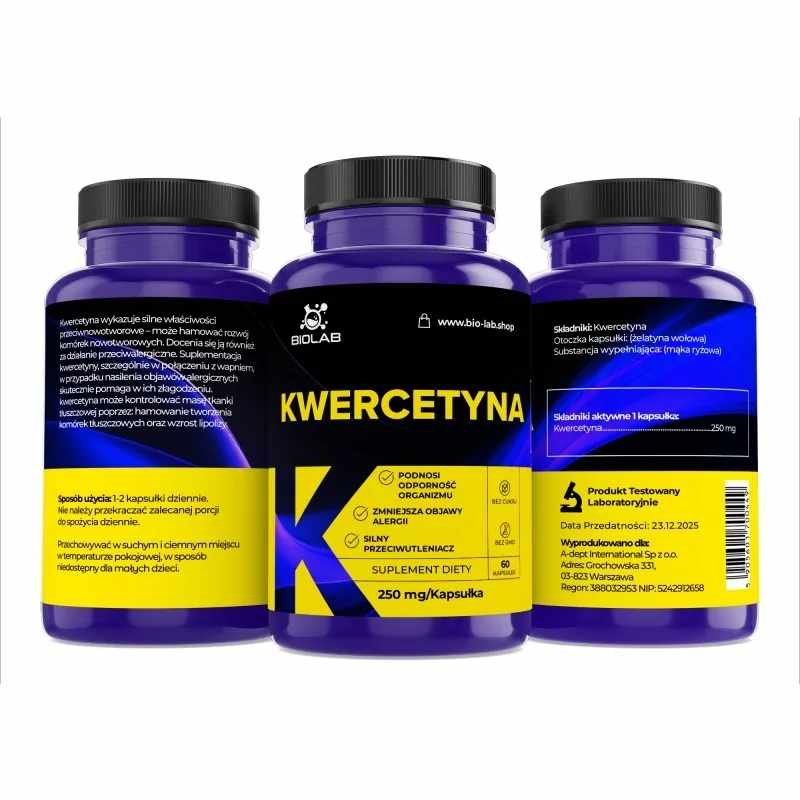
The package contains 60 supplement capsules.
Ingredients: Quercetin 250mg, gelatin capsule, rice flour.
Dosage: 1-2 capsules daily. Do not exceed the recommended dosage.
Store in a dry place, out of reach of children. Protect from moisture and direct sunlight. Food supplements should not be used as a substitute for a varied diet.