NAD+ is a key coenzyme of energy metabolism at the cellular level
Nicotinamide adenine dinucleotide(NAD+) and its reduced form NADH are essential cofactors for many cellular metabolic reactions and play a fundamental role in energy production.
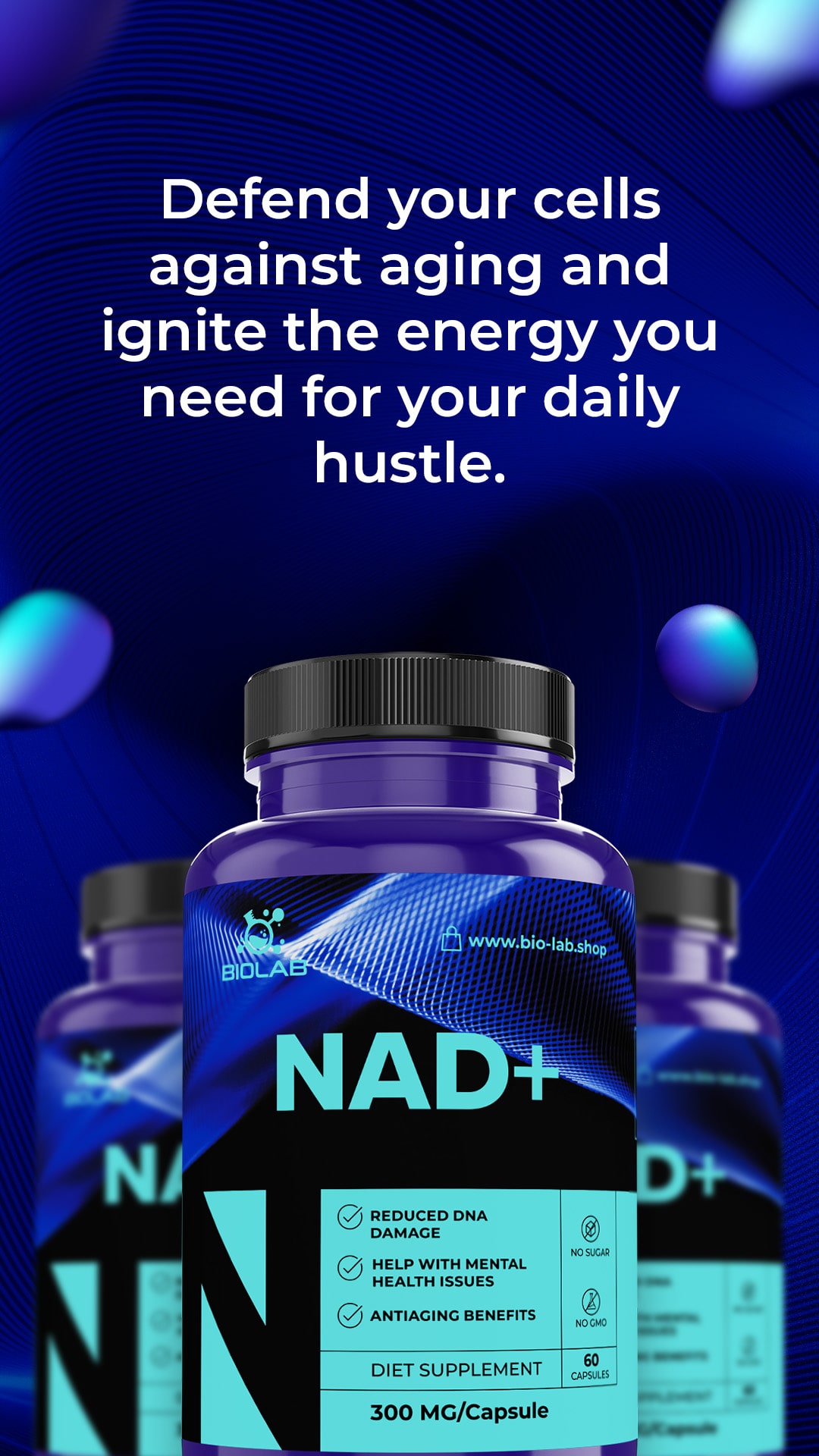
Nicotinamide mononucleotide (NMN) is a key precursor of NAD+, described in the literature as a component of NAD+ salvage pathways, as confirmed by numerous reports:
-
Inscribes in NAD+ biosynthesis pathways – including the key salvagepathway.
-
Provides a research tool – used to analyze changes in NAD+ levels under diverse experimental conditions.
-
Participates in redox metabolism – together with NADH, it is involved in chemical energy acquisition processes in the cell.
-
Influences metabolic “readouts” – studies analyze its role in the context of mitochondrial efficiency and energy homeostasis.
-
It is used to monitor cellular markers – the literature has described NMN-mediated changes in metabolic parameters in preclinical models.
-
It is a component of regulatory pathways – discussed in the context of processes dependent on NAD+ availability.
-
It appears in laboratory work – on the dynamics of changes in different types of tissues and cellular systems.
The scientific literature analyzes NMN/NAD+ primarily in the context of cellular metabolism and mitochondrial processes, where the interpretation of results is based on precisely defined endpoints of the research model.
Role in biosynthesis and transport mechanisms
Nicotinamide mononucleotide (NMN) is the nucleotide best known as a key intermediate in the biosynthesis of nicotinamide adenine dinucleotide. Although NMN biosynthetic pathways differ between eukaryotic and prokaryotic organisms, two mechanisms predominate in humans: a salvage pathway using nicotinamide and phosphorylation of nicotinamide riboside. Due to the specificity of the transporters, NMN enters the interior of mammalian cells in the form of nicotinamide riboside, to be converted to NMN and eventually to NAD+. This molecule is widely described in preclinical work as the foundation of the so-called “NAD+ axis,” which is the starting point for advanced mechanistic analyses.
The scope of biochemical research on NMN
Primarily mediated by its involvement in NAD+ biosynthesis, the described scope of research on NMN includes its role in functions such as:
-
Metabolic pathways and redox metabolism – including optimization of mitochondrial processes.
-
Energy management parameters – analyzed by measuring oxygen consumption and ATP production.
-
Nervous system cellular functions – studied in isolated laboratory models.
-
Metabolic homeostasis – analyzed in preclinical cardiometabolic models.
Breakthroughs in the activity of this molecule in the context of cellular metabolism have brought a new quality to modern biochemical research. The present study focuses on the mechanisms of NMN biosynthesis in mammalian and prokaryotic cells, as well as absorption processes and research directions noted in preclinical models.(source)
Additional Information
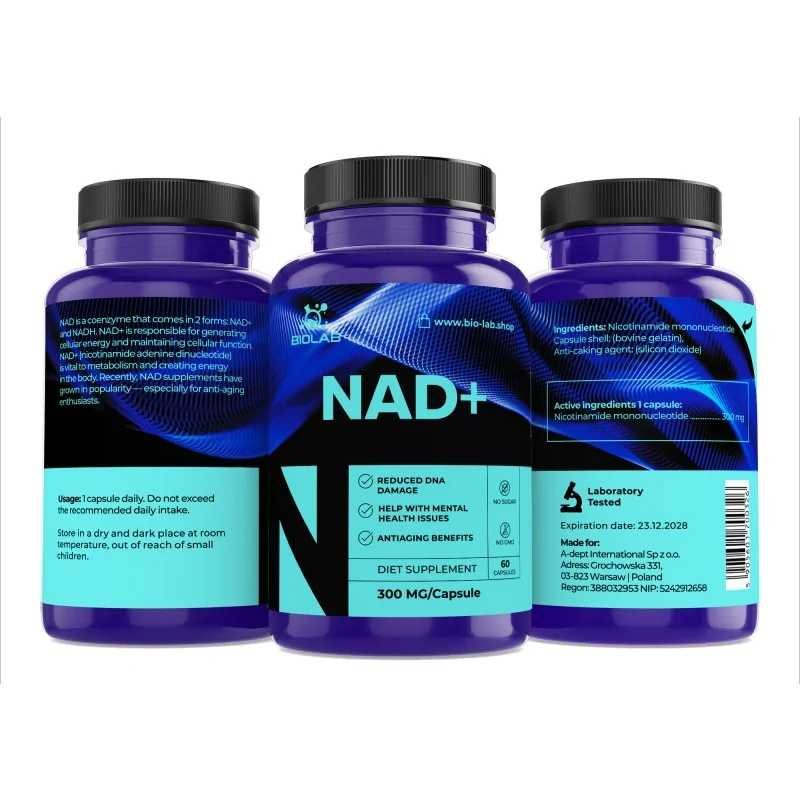
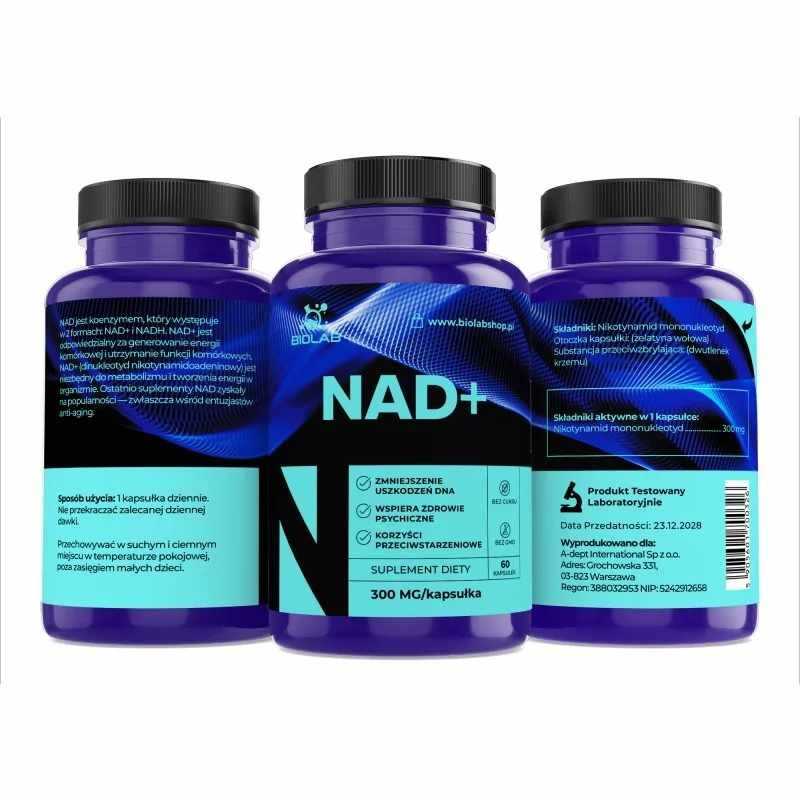
The package contains 60 supplement capsules. Ingredients: Nicotinamide mononucleotide 300mg, gelatin capsule, silicon dioxide. Dosage: 1 capsule per day. Do not exceed the recommended dosage.
Store in a dry place, out of the reach of children. Protect from moisture and direct sunlight. Food supplements should not be used as a substitute for a varied diet.