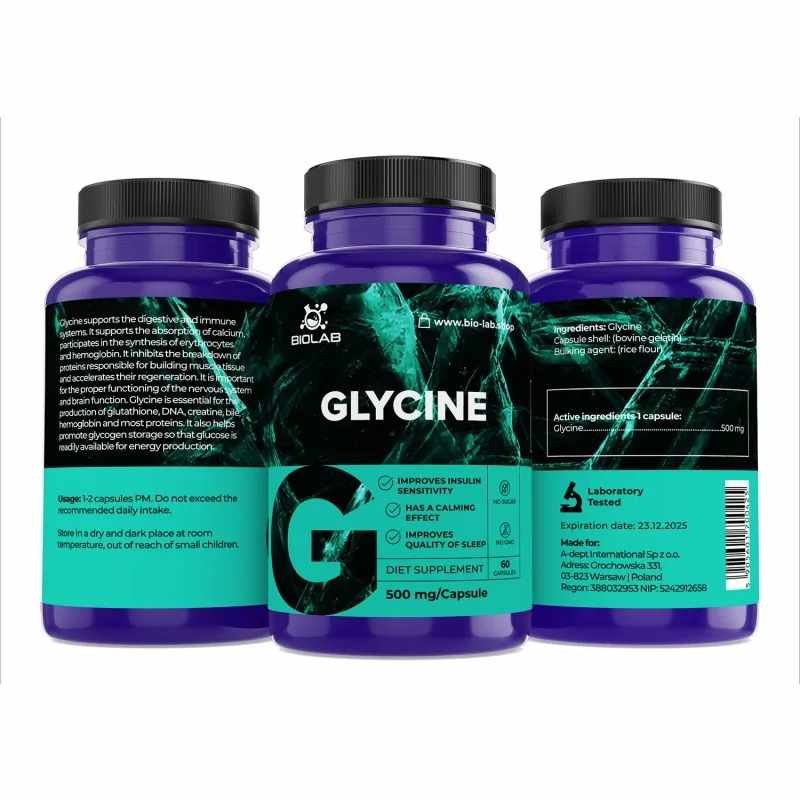
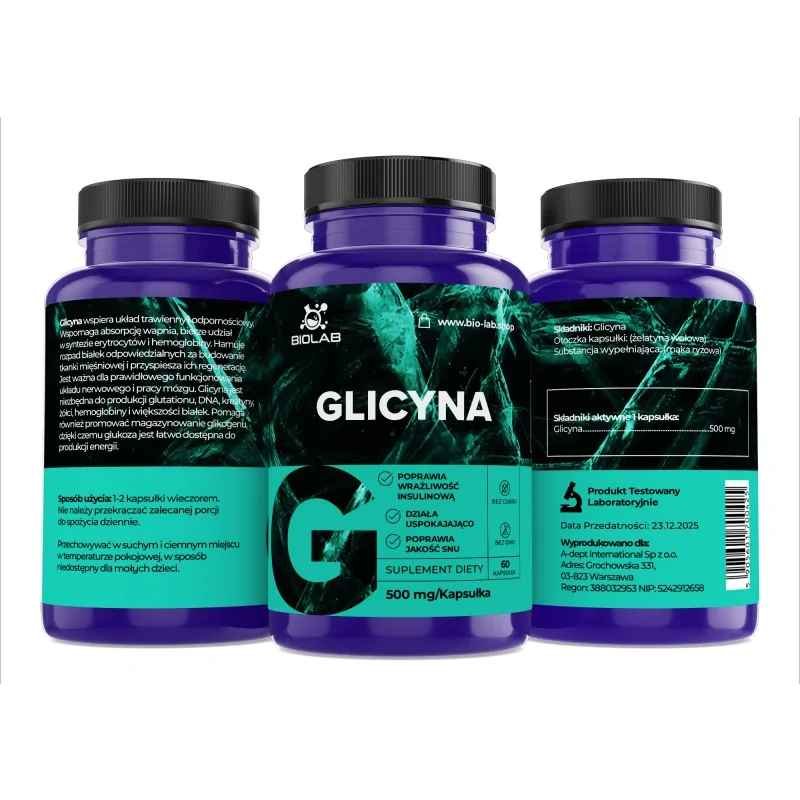
GLICINE 500 mg – ideal for your evening routine and to supplement your diet with glycine
Glycine is one of the amino acids present in the body and is an important component of proteins, including collagen – the main component of connective tissue, which includes bones, cartilage, tendons, ligaments and teeth.
What makes this product different?
- Supplements the diet with glycine – an amino acid present in the body’s proteins,
- A good choice for those concerned about a balanced diet and supply of amino acids,
- Works well as part of the routine of active people and during periods of greater stress,
- Simple formulation and convenient 500 mg serving,
- Neutral, versatile supplement for daily use,
- Good choice for the evening – as part of a quiet routine,
Glycine, an endogenous amino acid (the body can synthesize it), plays an important role in various physiological processes. In the diet, it can be supplied along with protein; therefore, its presence in the daily menu is sometimes important to meet the various needs of the body.
As an integral part of proteins, glycine is found abundantly in various food sources. Understanding the diverse natural sources of glycine is essential to creating a balanced diet:
1. Meat and poultry: Sources rich in glycine include various meats such as pork, chicken, turkey and beef. In particular, collagen-rich tissues, such as the skin and cartilage in these meats, contain extremely high levels of glycine.
2. Fish and seafood: Seafood enthusiasts can enjoy glycine in fish such as salmon, tuna and shrimp, which are delicious sources of this valuable amino acid.
3. Bone broth: The time-honored preparation of bone broth involves simmering bones and connective tissues, yielding a concentrated and highly bioavailable source of glycine.
4. Dairy products: Milk, yogurt and cheese, in addition to being sources of calcium and protein, also provide moderate levels of glycine.
5. Legumes and beans: Plant-based eaters can consume glycine from legumes such as soybeans, beans and black beans.
6. Spinach and kale: Green leafy vegetables such as spinach and kale add a little glycine to a plant-based diet.
While a well-balanced diet can meet the need for glycine, supplementation can be a convenient way to supplement its supply. Research is looking at the role of glycine in the body in various areas, including sleep, nervous system function, oxidative stress and physical activity.
1. Sleep: Numerous studies have analyzed the relationship between glycine supply and sleep parameters.
2. Cognitive function: Research papers have described the effects of glycine on selected processes related to nervous system function, including in experimental models.
3. Antioxidant properties: Scientific literature has described the involvement of glycine in mechanisms related to the body’s oxidative balance.
4. Physical activity: Studies have evaluated glycine in the context of exercise and post-workout recovery.
Glycine is involved in various biological processes:
1. Protein construction: Glycine is a component of many proteins, including collagen, enzymes and several structural proteins.
2. Neurotransmission: Glycine serves as one of the neurotransmitters in the central nervous system.
3. Glutathione synthesis: Glycine is one of the elements used by the body in processes related to glutathione, an important antioxidant compound.
4. Creatine synthesis: Glycine is involved in pathways related to creatine production.
5. Bile acid conjugation: Glycine participates in processes related to bile acids, which are important for fat digestion.
Additional Information
The package contains 60 capsules of the supplement.
Ingredients: glycine 500 mg, gelatin coating, rice flour
Dosage: 1-2 capsules in the evening. Do not exceed the recommended dose.
Store in a dry place, out of reach of children. Protect from moisture and direct sunlight. Food supplements should not be used as a substitute for a varied diet.