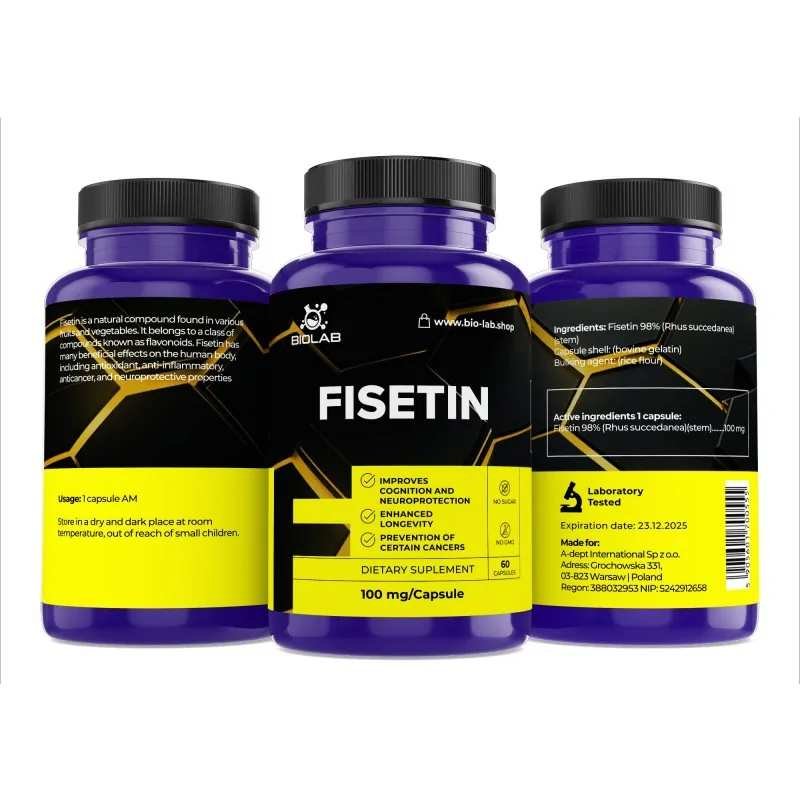
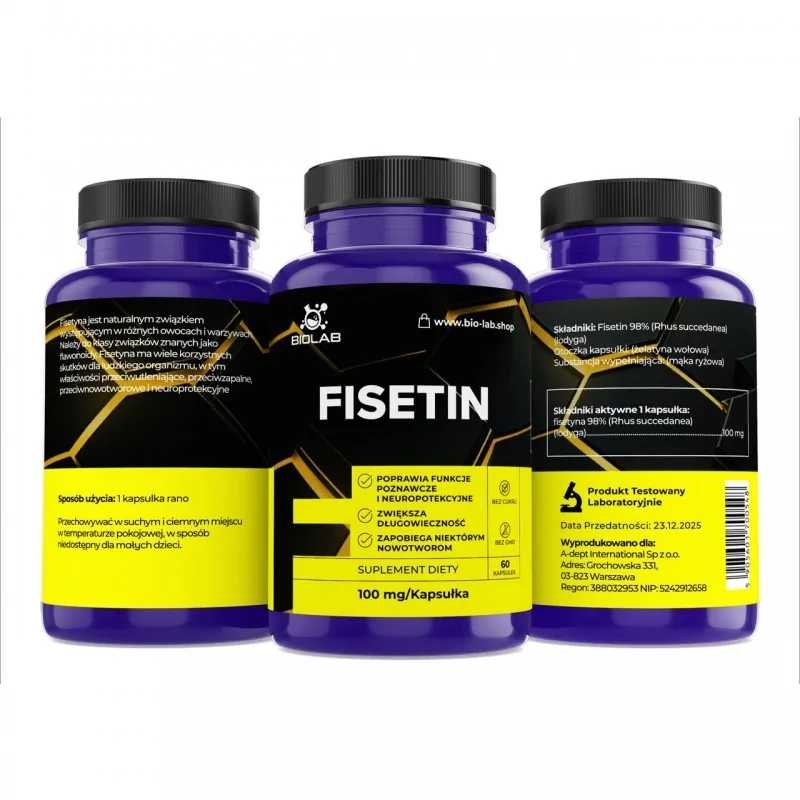
Fisetin 100 mg – subtle support for cellular vitality and daily form
Fisetin is a natural compound found in various fruits and vegetables in amounts ranging from 2 micrograms to 160 micrograms per gram of fruit or vegetable. It belongs to a class of compounds known as flavonoids. These compounds are widely reported in the scientific literature, and fisetin is one of the best recognized flavonoids in the context of antioxidant and cell function research.
What makes fisetin stand out in a daily routine?
- It supports the natural balance of cellular processes.
- It fits into a routine targeting long-term vitality of the body (healthy aging).
- It supports antioxidant activity and protection of cells from oxidative stress.
- It is discussed in the context of memory and daily cognitive comfort.
- Is analyzed in the literature in terms of cellular response to metabolic and environmental stress.
- May be a valuable component of more advanced supplementation routines.
- Is sometimes combined in supplementation practice with other flavonoids (e.g., quercetin) as part of a “stacking” approach.
Fisetin is widely described in the literature as a compound with antioxidant potential. Scientific publications analyze its association with oxidoreductive processes and selected markers of cellular response to stress. It is this line of research that makes fisetin often discussed in the context of daily form and cellular support.
What makes fisetin of such interest?
Like many flavonoids, fisetin is being analyzed for its antioxidant potential and its role in protecting cells from the effects of free radicals and reactive oxygen species. There are also analyses in the literature of its association with processes important for maintaining the body’s long-term health. While there is no clear answer as to what is “best,” phytonutrient-rich foods and well-chosen supplementation remain a popular approach in health-promoting routines.
Selected areas of fisetin research:
1. Fisetin and cognitive function
Experimental studies have analyzed fisetin in the context of long-term memory, markers of oxidative stress in neural tissue, and selected parameters related to brain cell function. The results of these studies depend on the model and methodology and do not provide a basis for making promises of effect in humans.
2. Fisetin and the body’s response to cellular stresses
The scientific literature discusses fisetin in the context of the cellular response to environmental and metabolic stress. Among other things, its relationship with selected parameters of inflammatory and oxidative responses has been analyzed in experimental models.
3. Fisetin and healthy aging (healthy aging)
In research publications, fisetin is sometimes discussed in the context of age-related processes and long-term cellular health. This line of research means that the compound is often associated with modern approaches to supporting daily vitality.
4. Fisetin and skin condition
The preclinical literature describes interest in fisetin in the area of skin responses to environmental factors and oxidative stress. These analyses include parameters related to tissue fitness and cellular processes, but their interpretation requires caution.
5. Fisetin in modern supplement routines
Because of its “science-based” profile, fisetin is the product of choice for those interested in antioxidation, cellular support and long-term daily form. In practice, it most often appears in routines targeting balance, healthy aging and overall vitality.
Additional Information
The package contains 60 capsules of the supplement.
Ingredients: fisetin 98% rhus succedanea 100mg, gelatin coating, rice flour
Dosage: 1 capsule in the morning. Do not exceed the recommended dose.
Store in a dry place, out of reach of children. Protect from moisture and direct sunlight. Food supplements should not be used as a substitute for a varied diet.