INFORMATION:
- The product (substance) is not a food or dietary supplement, and is not suitable for human consumption.
- Keep out of the reach of children.
- Keep the container tightly closed.
- Store in a dry, cool, shaded place; protect from moisture.
- Store only in original container.
- Avoid contact during pregnancy and lactation.
- Consult a physician if you feel unwell or have adverse reactions related to contact.
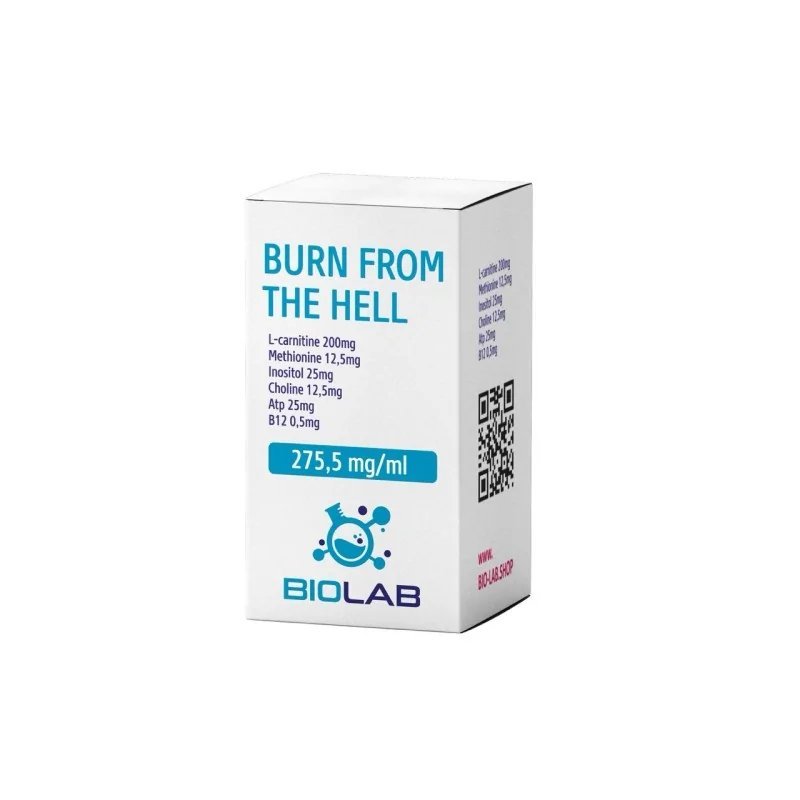
Burn from the Hell is a multi-component laboratory reagent designed to precisely analyze the processes of energy transport, fatty acid oxidation and modulation of the antioxidant status of cells. The formulation combines key metabolic cofactors with high-energy nucleotides, enabling the study of biochemical synergy under conditions of intense energy metabolism.
L-Carnitine 200 mg
L-carnitine is an endogenous compound, described in the literature as an element in the transport of acyl fatty acid derivatives into mitochondria as part of bioenergetic pathways. In research, it is used in the context of lipid metabolism, mitochondrial function and analysis of acyl-CoA metabolism and energy balance of the cell. Experimentally, it is sometimes used as a component of models concerning mitochondrial function and metabolic flows.
Methionine 12.5 mg
Methionine is a sulfur amino acid involved in many metabolic transformations, including methylation (SAM/SAH pathway) and biosynthesis of sulfur-containing compounds. It is also analyzed as a component of the pathways leading to the formation of glutathione (GSH), which links it to the topics of redox balance and oxidative stress response in laboratory conditions.
Inositol 25 mg
Inositol (and its phosphate derivatives) is a component of membrane structures and part of signaling pathways, including those involving phosphoinositides. In studies it is sometimes considered in the context of cellular relay and regulation of selected metabolic processes, depending on the model and experimental conditions used.
Choline 12.5 mg
Choline is a compound used in biochemical analyses as a precursor of phosphatidylcholine (a component of cell membranes) and as a substrate in the acetylcholine synthesis pathway. Research papers describe it in the context of lipid metabolism, membrane structure and cholinergic system-dependent signaling (in model terms).
ATP 25 mg
ATP (adenosine triphosphate) is the primary energy carrier in cells, used in numerous enzymatic reactions. In laboratory studies, ATP is a standard component of analyses of bioenergetics, ATP-dependent enzyme activity and phosphorylation processes.
Vitamin B12 (cobalamin) 0.5 mg
Vitamin B12 (cobalamin) is an enzyme cofactor in pathways associated with, among other things, one-carbon metabolism and methylmalonyl-CoA metabolism. In laboratory settings, it is sometimes discussed and used in the context of studies of cobalamin-dependent enzymes and models of metabolism.
Note: The above description is informative and refers to the role of the compounds in biochemical terms and their potential applications in research. The product is a laboratory reagent for research purposes only and is not intended for human consumption.